Friday, August 12, 2022

Pleading the 5th: What He Said Before - and What he Just Did... Idiot

 When you're a bully, an egotist, a self-righteous buffoon you attack people for doing something. Then later you go ahead and do the same thing and say it's fine. Such is the case with DJT who pleaded the 5th Amendment (the right to not speak because it could incriminate someone), when he said it 440 TIMES!!  He previously said, "People who use the 5th are criminals." YUP, they are.

Here's the story and VIDEO Proof of his previous comments on "Taking the 5th."

TRUMP PLEADS FIFTH OVER 440 TIMES IN CIVIL INVESTIGATION 

Former President Donald Trump reportedly invoked his Fifth Amendment right against self-incrimination over 440 times under oath in the New York attorney general's investigation into his business dealings. “I once asked, ‘If you’re innocent, why are you taking the Fifth Amendment?’ Now I know the answer to that question,” Trump said in a statement, claiming he and his family were "Witch Hunt" persecution victims. (Associated Press)

WHAT IS THE FIFTH AMENDMENT? 

 The Fifth Amendment protects individuals from being forced to incriminate themselves. Incriminating oneself is defined as exposing oneself (or another person) to "an accusation or charge of crime", or as involving oneself (or another person) "in a criminal prosecution or the danger thereof".

VIDEO: https://youtu.be/hMyh7ko9L2g

Thursday, August 11, 2022

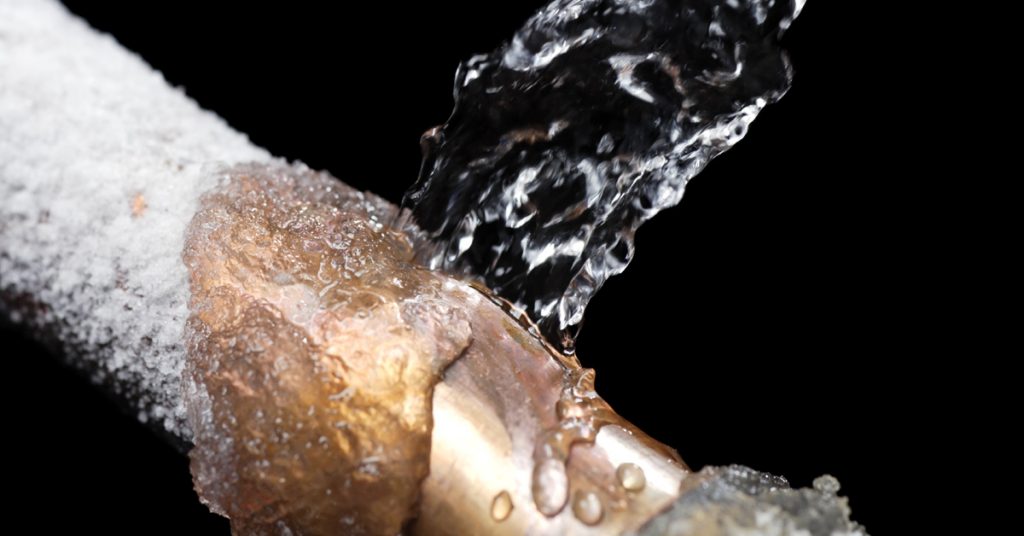
Why do freezing pipes burst? the science behind it

 Although we're not thinking about bursting pipes from winter temperatures here in the Northern Hemisphere as we are in Summer, it's always good to know why freezing pipes burst so you can prevent it from happening  months from now. Readers in the Summer Hemisphere right now need to know this as their winter is  NOW! **I added subtitles to parts of the article to make it easier to read the science behind it from LIVESCIENCE.


Why do freezing pipes burst? 

By Elizabeth Howell LIVE SCIENCE

  Here's the science behind these bursting pipes and how to prevent it.

Bursting water pipes are a major concern when winter temperatures drop below freezing. But why do frozen pipes burst?

The simple answer is that as water freezes into ice, it expands, resulting in solid ice filling more volume compared with the liquid that used to be running through the pipes. That ice creates pressure inside the pipes that can cause a rupture.

"If there's no relief, ice is just going to burst a pipe," John Galeotafiore, who has an engineering background and is an associate director of product testing at Consumer Reports, told Live Science. His organization produces home maintenance guides on matters like pipe safety(opens in new tab).

"I've seen copper pipes that burst," Galeotafiore added, but said bursting can be just as much due to a weak fitting as to a weak spot in the pipe. Also, plastic piping is not immune, especially as the material ages.

NOT A SOLUTION "I've heard that some people say, 'Well, I have PVC or PEX plastic piping.' But while that might offer a slight delay in causing issues, it's really not the solution," Galeotafiore said.

WHEN WATER FREEZES IT EXPANDS- Think of Ice Cubes!! When water freezes, its molecules crystalize into an open hexagonal arrangement, which takes up more space than when the molecules are in their liquid form — that is, the water molecules expand as they freeze.

As the ice expands, it pushes liquid water toward the closed faucet. This causes an immense amount of water pressure to build between the ice blockage and the faucet — eventually, the pipe ruptures under the pressure, usually at a spot where there's little or no ice.

The pipe segments upstream of that ice clog generally aren't in danger of bursting because the pressure isn't great enough. In this case, the water isn't blocked, and can always retreat back to its source.

WHICH PIPES ARE AT A HIGHER RISK? Pipes that are the most at risk of bursting are those that are exposed: located outside of building insulation, or in unheated interior areas like basements, attics and crawl spaces. Also at risk are mobile homes and three-season cottages that have thin walls and little or no insulation; Galeotafiore said you'll need to flush out your piping systems before winter to reduce the risk of damage to your property.

THE DANGER POINT The typical danger point is at temperatures of about 20 degrees Fahrenheit (minus 7 degrees Celsius). Danger signs to look for include water not flowing at all, or water flowing more slowly than usual, Galeotafiore said. "That's a big sign the pipes are starting to freeze."

HOW TO HELP PREVENT BURSTING PIPES Heating or insulating these vulnerable pipes with fiberglass or foam sleeves can help prevent them from bursting. Additionally, keeping the faucet open and letting the water run — even at just a trickle — will help prevent the water pressure from building to dangerous levels. Galeotafiore also urges people to go into their attic or crawlspace on a sunny day and plug any holes in the wall that let in daylight.

If more insulation is required, however, call a professional as there might be safety concerns or other problems associated with putting large amounts of modern insulation in a house at once. Be especially careful if your house has asbestos insulation, which will cause health issues if disturbed improperly and requires special care by licensed contractors.

INSIDE TEMPERATURE -62F AT LEAST If you're away from the house for more than a day errand, Galeotafiore said to make sure your interior temperature is more than 62 F (17 C) to reduce the risk of pipes freezing. Also shut off the water at the source if at all possible. While heating is expensive, he acknowledged, "don't worry about the cost savings, because it's going to be a lot less expensive than dealing with a broken pipe." Originally published on Live Science.

Wednesday, August 10, 2022

Enjoyed at the Theatre: Minions: The Rise of Gru (Great soundtrack/Minions Trivia)

 Two weekends ago we went to the theatre and saw the animated film "Minions: The Rise of Gru." We were two of the 6 people in the theatre, which was nice... and the movie was fun and light-hearted. I loved the soundtrack, which featured a lot of 1970s songs by artists like the Carpenters, Rolling Stones, Diana Ross and more! Today's blog has my review, the film summary, a note about salaries, Minions Trivia and the trailer. 

MY TAKE: The movie was fun and had a couple of good on-liners, and the story z of 1 year old Gru trying to be like his villainous idols was entertaining. The Animation was AMAZING. At times I thought the backgrounds were actually filmed in real places and the animations put over the backgrounds, but nope! “Minions” is the fifth installment in Universal and Illumination’s popular “Despicable Me” franchise and worth a watch! 4 of 5 stars (great music and animation, could have used a bit more comedy).

SUMMARY:  "In the 1970s, young Gru tries to join a group of supervillains called the Vicious 6 after they oust their leader -- the legendary fighter Wild Knuckles. When the interview turns disastrous, Gru and his Minions go on the run with the Vicious 6 hot on their tails. Luckily, he finds an unlikely source for guidance -- Wild Knuckles himself -- and soon discovers that even bad guys need a little help from their friends."

Apparently the rest of the world loved the movie, too, because Variety magazine noted it has achieved $700 million globally as of August 1st. 

MINIONS TRIVIA:  

What is Minionese? Similar to Spanglish or Swiss-German, it turns out that the Minions actually use a combination of dialects when they speak. According to Day Translations, their language is mostly made up of: “Minionese” (a totally made-up language), in addition to English, Spanish, French, Filipino, and also, a little bit of Italian.

Where are the minions from?  Most Minions appear either bald or with a few wispy strands of black hair on their heads. After leaving their home country of Switzerland in favor of a new life in America during the late 1960s, their clothing consists of blue overalls emblazoned with Gru’s logo, black rubber gloves, shoes, and goggles.

What race is Gru Despicable Me? TL,DR: Gru is Hungarian.

************************************************

SALARY SIDE NOTE : CartoonBrew.com reported: Artists are expressing their disappointment after it was revealed this week that actor Steve Carell was paid a jaw-dropping $12.5 million dollars for his voice performance in Minion: The Rise of Gru. That disappointment seems even more justified when considering NCBUniversal and Illumination’s latest crossed the $500 million mark at the box office last weekend.

*** I agree that's really outrageous- Matthew Robert Davies / @Matt2Dee noted that salary is crazy for voice work: I don’t care what anyone says, but most of that budget should be given to the animation staff. Does someone really NEED more than 1-2mil for a few weeks of VO work? That 10mil divided amongst the actual animation studio staff could change lives.

VIDEO TRAILER: https://youtu.be/6DxjJzmYsXo


Tuesday, August 9, 2022

Great Classic Graphic Novel Collection: DC Showcase Presents Unknown Soldier Vol. 2

I've been reading comic books since the 1970s and I never got into war comics because I didn't like the idea of it. But recently I bought a 500-page black and white graphic novel collection of "The Unknown Soldier" stories from DC Comics called "DC Showcase Presents Unknown Soldier Vol. 2." 

    The Unknown Soldier is a man whose face was permanently and badly damaged so he has to wear bandages wrapped around his face. But he's one of the most resourceful, intelligent soldiers and he's a master of disguise - so when he infiltrates enemy lines, he takes the identities of some local people, or enemy soldiers or officers (that he does away with) to complete his missions. All of these stories were extremely well done and thought out. Most were written by Bob Haney or David Michelinie and many were illustrated by the famous joe Kubert. The mystery, intrigue, and action of the stories were really enjoyable. I will look for Volume 1.

Monday, August 8, 2022

Discovery: Tonga's eruption injected so much water into Earth’s atmosphere that it could weaken the ozone layer

 The volcanic eruption that occurred in the Pacific Ocean island of Tonga in January 2022 was huge, and impacts continue to be found. Here's the latest one from LiveScience.

(image: The GOES-17 satellite captured images of an umbrella cloud generated by the underwater eruption of the Hunga Tonga-Hunga Ha’apai volcano on Jan. 15, 2022.   (Image credit: NASA Earth Observatory image by Joshua Stevens using GOES imagery courtesy of NOAA and NESDIS))

Tonga's eruption injected so much water into Earth’s atmosphere that it could weaken the ozone layer

By Harry Baker LIVE SCIENCE Aug 2, 2022 The atmospheric water vapor could also contribute to global warming.

When an underwater volcano in Tonga erupted in January, it belched out more than ash and volcanic gases; it also spewed 58,000 Olympic-size swimming pools' worth of water vapor into Earth's atmosphere, a new study finds.

This water vapor could end up being the most destructive part of the volcano's eruption because it could potentially exacerbate global warming and deplete the ozone layer, according to the study.

When the Hunga Tonga-Hunga Ha'apai volcano erupted on Jan. 15, it became the most powerful explosion on Earth in more than 30 years, with an equivalent force of 100 Hiroshima bombs. The explosion sent shock waves around the planet, causing the atmosphere to ring like a bell and generating tsunamis that battered nearby coasts. A plume of ash and dust reached higher into the atmosphere than any other eruption on record and triggered more than 590,000 lightning strikes in three days.

In the new study, researchers used data collected by NASA's Aura satellite to assess the amount of water that was thrust into the stratosphere, the second layer in Earth's atmosphere, which extends from 4 to 12 miles (6 to 20 kilometers) up to 31 miles (50 km) above the planet's surface. The results revealed that 160,900 tons (146,000 metric tons) of additional water vapor had entered the stratosphere since the volcano erupted, reaching a maximum altitude of 33 miles (53 km), which is in the mesosphere, the layer of the atmosphere that extends from the top of the stratosphere to an altitude of 53 miles (85 km).

This makes it the largest and highest injection of water into the stratosphere since satellites began taking measurements.

It is not totally surprising that the Tonga eruption injected a large amount of water vapor into the atmosphere, considering the explosion ignited around 492 feet (150 meters) below the ocean's surface, the researchers said. When the volcano erupted, seawater that came into contact with erupting magma was rapidly superheated, which resulted in large amounts of "explosive steam," they wrote. This is one of the main reasons the explosion was so powerful. However, this is the first time the amount of water has been accurately measured, and it turned out to be much more than scientists had expected. FULL STORY:

Sunday, August 7, 2022

Idiot of the Week: American Tourist Falls into Mt. Vesuvius After Cell Phone

If you drop your cellphone into a dangerous place, please don't go for it. If you phone falls in a sewer grate, into river rapids, or in a volcano, it's not worth risking your life. You can get a new one. This guy from Maryland apparently didn't think about it and fell into Italy's active volcano.

(Photo: I took this photo of Mt. Vesuvius when we visited in 2016. Credit: R.G.) 

American tourist fell into crater of Mount Vesuvius trying to retrieve his phone 

SKY NEWS July 18, 2022

Italian media said the 23-year-old had been trying to take a selfie at the summit when his phone slipped out of his grasp and into the crater.

He tried to reach the device during Saturday's incident, but then fell a number of metres into the mouth of the volcano.

Vesuvius guides, overseen by a rescue helicopter, abseiled into the crater to reach the man, who later needed treatment for minor injuries.

Reports said the tourist and three relatives had taken a forbidden route to the summit and face charges.

Mount Vesuvius in Italy is regarded by experts to be one of the most dangerous volcanoes in the world, with a population of about 600,000 living within its danger zone.

Any eruption would also have an impact on three million people in the Naples area.

Saturday, August 6, 2022

Hero of the Week: Man installing solar panels heard a girl was missing. Then he found her!

This week's hero is a man who was working to install solar panels on a home in Plymouth, Massachusetts. He took it upon himself to look for, track down and save a 5 year old autistic child. Here's the story from Plymouth Police Department Facebook page:


A man was installing solar panels in Plymouth when he heard a girl was missing. Then, he found her.

Plymouth, Mass. Police Dept. July 18, 2022

We think Jake Manna should go viral....Here's Why: On July 13, 2022 he was installing solar panels in Buttermilk Bay. He heard that people in the neighborhood were looking for a missing, five year old autistic girl. He stopped what he was doing and began searching.

He walked down a rural trail that ended at a stream. He noticed a diaper and T-Shirt in the stream...

Panicked, he ran down the stream to a marsh where he found the young girl in waist deep water. She did not listen to him and continued wading outward. He was able to make his way to her and "put her over his shoulder," carried her out, and got her to safety.

Jake is not from Plymouth and doesn't know the area. If he didn't pick that path and see the missing clothing, we hate to think about what the outcome would have been.

Officer Vinnie Roth, who was responding to the original call, stated: "That girl had a guardian angel yesterday...and his name was Jake."

We met Jake today, and he was presented with our thanks, a certificate and Command Coin from Chief Dana Flynn and Captain LeBretton. He is the nicest, most unassuming young man that one could meet...He also has great hair!

Original post from Plymouth Poice Dept. Facebook page: https://www.facebook.com/PlymouthMAPoliceDept/photos/a.111341298128748/164464746149736/

Friday, August 5, 2022

Science: Our ancestors became warm-blooded later than we thought

Earlier this month I shared a new research story about how Dinosaurs survived winter cold temperatures, likely because they were warm-blooded. Now another study looks into our ancestor's ears as a clue to warm blooded-ness! Here's the story from Science. 


 (Image) Female red fox breath is visible as it walks along a tree branch at night Warm-blooded animals such as the red fox above can regulate their body temperature, allowing them to move around at night and in the cold.MILAN RADISICS/NPL/MINDEN PICTURES

Our ancestors became warm-blooded later than we thought

New study on ear canal bones sheds light on mammal mystery

20 JUL 202211:25 AMBYKATHERINE IRVING, Science Magazine

When paleontologist Romain David first laid eyes on a set of penny-size tubes of fossil bone at the National Museum of Natural History in Paris in 2008, he was struck by the unusual shape and varying sizes of these inner ear structures, called semicircular canals. Paleontologists have long used them to infer ancient animals’ movement patterns, but David and his colleagues today apply them to another mystery: They argue that warm-bloodedness first arose in mammal ancestors likely about 233 million years ago in the Late Triassic, 20 million years later than previously thought.

“It’s quite exciting,” said Jasmina Weimann, a molecular paleontologist at the California Institute of Technology who wasn’t involved with the study. “It is the first time that any relationship between canal shape and temperature has been proposed,” she says, adding that the new method also offers a promising way to trace the evolution of long-extinct animals.

Warm-bloodedness, or endothermy, is a trademark of living mammals and birds—and apparently some dinosaurs. It allows a more constant body temperature in the face of outside temperature fluctuation. This requires more energy, but it allows animals to move at night and in the cold, which cold-blooded (ectothermic) animals cannot do. Paleontologists agree that early vertebrates were all cold-blooded, but they’ve debated when warm-bloodedness arose.

Warm-blooded animals usually have faster growing bones and sport fur or feathers for insulation, so researchers have studied those features to estimate when mammals’ journey to endothermy started. But those measures aren’t exact proxies and could have first evolved for other reasons.

EXAMINING EAR CANALS

Enter David, now a paleontologist at the Natural History Museum in London, with a new idea about semicircular canals: After doing his Ph.D. on the structures, he noted that mammals have smaller semicircular canals for their body size than other vertebrates. “The whale shark is actually the animal with the largest semicircular canals on Earth, much larger than the canals in whales,” David says. “I thought, ‘Maybe this has to do with body temperature.’”

He was also struck by the importance of the fluid inside the canals, endolymph, which changes in viscosity depending on temperature. Like oil in a hot pan, it becomes thinner as it heats up and thicker as it cools. David suspected that endolymph viscosity and semicircular canal size were related, and that both could reflect endothermy.

To test that hypothesis, David and his team examined the ear canals of 277 living animal species including alpacas, turkeys, and lizards. Their results confirmed David’s suspicions: The warm-blooded animals had less viscous endolymph and smaller and thinner canal shapes. Cold-blooded animals had thicker endolymph and larger, thicker canals.

APPLICATION TO FOSSIL STUDY

The team then applied this knowledge back to fossil specimens to figure out when endothermy evolved. Although the ear canal, because it’s made of soft tissue, doesn’t often fossilize, the bony tubes that encompass these canals do, and can be used to infer canal shape. 

The researchers examined 64 extinct species, including mammals, mammallike ancestors from more than 230 million years ago called mammaliamorphs, and much older ancestors known as nonmammalian synapsids. 

The team was able to trace when animals with smaller, thinner ear canals appear: in the Late Triassic, about 233 million years ago—just about the time when mammaliamorphs evolved from nonmammalian synapsids, the researchers report today in Nature. This change happened relatively suddenly, over less than 1 million years, says co-author Ricardo Araújo, vertebrate paleobiologist at the Institute for Plasmas and Nuclear Physics of the University of Lisbon’s Higher Technical Institute. “We are not only saying when endothermy starts, we can also say when ectothermy [in mammalian ancestors] ends.”

Some researchers had previously speculated that nonmammalian synapsids, which include the famous sail-backed behemoth Dimetrodon, were also warm-blooded. The new finding puts the “nail in the coffin” of that idea, Araújo says.

However, the study is one piece of a larger unfinished puzzle, cautions Hans Straka, a neurobiologist at the Ludwig Maximilian University of Munich. Endothermy did not just come out of nowhere, he notes, and more fieldwork needs to be done to prove the suddenness of the change. If a new fossil mammaliamorph were to be discovered from a different time period, for instance, the beginning of endothermy would change as well. “Endothermy, it’s not all or nothing,” he says. “There is no black and white transition, it’s a gradual thing.”

But Straka agrees that ear canal bones become more prevalent in future endothermy studies, for example in the debate over dinosaur warm-bloodedness that has lasted decades. “It’s refueled the discussion,” Straka says. “And that’s good.”

Thursday, August 4, 2022

Wow! Amazing Horror/Fiction book: Craven Manor by Darcy Coates

Someone recommended that I read "Craven Manor" by Darcy Coates and I  thoroughly enjoyed it. Fantastic writing and characters that draw the reader in immediately!  A mysterious mansion, dead, undead, or living mysterious people that a 20-something guy encounters after receiving a mysterious note inviting him to tend the garden of this 200-year-old abandoned house. His needs are all met, and he's paid handsomely... Then it all unravels. Wow. This is a 5 out of 5-star book and I can't wait to read another novel by this amazing author.


ABOUT THE BOOK:  

Daniel is desperate for a fresh start. So when a mysterious figure slides a note under his door offering the position of groundskeeper at an ancient estate, he leaps at the chance, even though it seems too good to be true. Alarm bells start ringing when he arrives at Craven Manor. The abandoned mansion is straight out of those old gothic mysteries: the front door hangs open, and leaves and cobwebs coat the marble foyer. It's clear no one has lived here in a long time... but he has nowhere else to go. 

Against his better judgment, he moves into the groundskeeper's cottage tucked away behind the old family crypt. But when a candle flickers to life in the abandoned tower window, Daniel realizes he isn't alone after all. Something awful happened here long ago, and it's a paranormal mystery Daniel is afraid to solve. Because Craven Manor is hiding a terrible secret... One that threatens to bury him with it.


Wednesday, August 3, 2022

Cave explorers discover a 19th-century mining scene preserved like a time capsule

It's always fascinating to find a place that was abandoned and preserved as it was in the past. That's why I love visiting the town of Tombstone, Arizona- it looks similar to the way it did in the 1880s. But this story is about a mine re-discovered in the United Kingdom that has artifacts from the 1810s! Here's the story from LiveScience'

(Image: Jamie Lund, an archaeologist, and Ed Coghlan, a caving club leader, explore mines beneath Alderley Edge. (Image credit: National Trust Images/Paul Harris)

Cave explorers discover a 19th-century mining scene preserved like a time capsule

By JoAnna Wendel  LIVE SCIENCE (click for source article) 

Leather shoes, clay pipes, a mysterious inscription written in candle soot — these are just a few of the artifacts a group of cavers recently discovered in a centuries-old cobalt mine in Cheshire, England.

The mine, located near Manchester in a village called Alderley Edge, was once a source of cobalt, an element mined for the brilliant blue pigment imbued on pottery and glass. Cobalt mining was a lucrative trade for England in the 19th century. But imports from other countries became cheaper than English cobalt, so this particular mine, owned by Sir John Thomas Stanley in the early 1800s, was abandoned around 1810.

Members of the Derbyshire Caving Club have been exploring the Alderley Edge mine since the 1970s, leasing access from National Trust, a U.K.-based conservation charity. The caving group recently stumbled upon some personal items left behind in a previously unexplored part of the mine. The discovery was like opening a time capsule.

The remains of a shoe found in an old mine in northwestern England. It is a single black shoe and in fairly good condition, although it is rather worn looking.

(Left: image of what the mine looks like- Cobalt Mines Alderley Edge. Credit: https://christiansltd.com/Cobalt%20Mine%20at%20Alderley%20Edge/) 

"To find a mine in pristine condition, together with such personal objects and inscriptions, is rare," Ed Coghlan, a member of the Derbyshire Caving Club, said in a statement(opens in new tab) from National Trust. "It is a compelling window into the past and to the last day when the mine workers stopped their activities."

Along with the shoes and pipes, the cavers found a bowl buried in a wall, which might be a sign of superstitious miners thanking the mine for its good ore, according to the statement. One rare finding was an instrument called a windlass, used for lifting and shifting heavy materials.

The fact that the miners left such an important tool behind makes Coghlan suspect that the miners "were told without much warning to collect their tools and move on," he said.

One particularly mysterious finding was an inscription of the initials "WS," with the date "August 20, 1810" written below. "Our research so far has not identified who this could be," Coghlan said. "Was it just an individual wanting to say, 'I was here,' or from a visit by a mine manager or estate owner, or could it have been to indicate the last day this mine was in use?" The cavers found other words and numbers scratched into the mine's walls.

"We found other more basic initials and numbers in what we believe were the 'cribs' or rest areas, as if someone had been learning and practicing their writing," Coghlan said.

(IMAGE: This 200-year-old instrument, called a windlass, would have been used to move heavy material. (Image credit: National Trust Images/Paul Harris)

Now, you can tour the mine *(CLICK HERE FOR WEBSITE)  from the comfort of your home. To make the historic discovery more accessible to the public, the Derbyshire Caving Club and the National Trust teamed up with Christians Survey and Inspection Solutions, a company that uses technology to build virtual, 3D models of buildings and underground spaces.

In the Alderley Edge mine, the team used laser scanners, which shoot lasers around the environment. Those laser beams bounce back into the scanner, which calculates the distance each laser beam traveled. Doing that hundreds of times around a space produces a virtual 3D picture.  

Originally published on Live Science.

Tuesday, August 2, 2022

Science: Stars don't actually twinkle

 If you look up at night and see stars, they appear to twinkle, but that's only because you're standing on planet. If you were in space, they wouldn't. Here's a great article from LIVESCIENCE explaining the phenomenon... and why planets don't twinkle.

(Image: NASA’s James Webb Space Telescope has delivered the deepest and sharpest infrared image of the distant universe so far. Webb’s First Deep Field is galaxy cluster SMACS 0723, and it is teeming with thousands of galaxies – including the faintest objects ever observed in the infrared. Credit: NASA)

Stars don't actually twinkle

By Colin Stuart LIVE Science, June 2022 

Stars don't twinkle.  The twinkling we see has nothing to do with the stars themselves. Rather, it's a result of how we see them from our perspective on Earth.

Because stars are so far away, we see them as tiny points of light in the night sky.

"Starlight travels a great distance to reach our eyes on a clear night," said Ryan French, a solar physicist at University College London in the U.K. After our own star, the sun — whose average distance to Earth is 93 million miles (150 million kilometers) — the nearest star to us isProxima Centauri, which is over 4 light-years from Earth.

On the way to our eyes, this light from distant stars encounters Earth's atmosphere — the key driver behind the twinkling effect.

"As this point of light reaches the atmosphere, it passes through layers of wobbling air before reaching our eyes, causing it to twinkle," French said.

So it's Earth's wobbling atmosphere that makes stars appear to twinkle. In space, high above the atmosphere, stars don't twinkle at all. (That's one reason why the Hubble Space Telescope was sent into orbit: It could get sharper images of space without the images being distorted by atmospheric turbulence.)

Why some stars twinkle more than others Many factors affect how much a star appears to twinkle. One variable is the star's place within our field of view.

"Stars will twinkle more if their starlight travels through more air before reaching our eyes," French said, so stars near the horizon appear to twinkle more because their light has to journey through more atmosphere to get to us.

Weather also plays a role. "Humid nights will also cause the air to be thicker," making stars appear to twinkle more, French said.

When you look up at the night sky, you may also notice that some stars appear to shift between different colors as they twinkle. Sirius, the brightest star in Earth's night sky, is a classic example. "Starlight gets refracted [bent] by the atmosphere a little bit, which can cause it to change color," French said. This effect is more noticeable with brighter stars.

You may also notice a few "stars" that don't twinkle at all. That's because they are actually planets. "Unlike stars, planets are not point sources in the sky, but have width," French said. "This is because they are far closer to us." In other words, they are too big in the night sky for the atmosphere to make them appear to twinkle.

However, if you look at the planets, or even the moon, through a telescope, you'll still see them appear to shimmer, as the light you're seeing has been jostled by the atmosphere on its way to your eyes.

Original article on Live Science.

Monday, August 1, 2022

Ridiculous IRAN: having a pet could soon land you in jail

 As a dog dad, to deprive someone the love of a pet leads to a heartless and cruel society. Pets teach us how to love unconditionally, and it looks like Iran is going to become a Loveless place and a country of hatred and misery.  They're planning to ban pets in the country. WTH is wrong with them?  Here's the story from BBC NEWS.

(Image: IRANIAN ROYAL FAMILY COLLECTION
Image caption,
Dogs became a symbol of urban life in Iran during the 20th Century, with even the shah's family keeping several as pets) 


The country where having a pet could soon land you in jail

By Ali Hamedani

BBC World Service July 20, 2022

"He looks at me with his innocent and beautiful eyes. He is asking me to take him out for a walk, but I don't dare. We will get arrested." Mahsa, who has a dog, is referring to a new wave of arrests of pet owners and seizures of their animals in the Iranian capital, Tehran. Police there recently announced that walking dogs in parks was a crime. The ban was justified as a measure to "protect the safety of the public".

At the same, the Iranian parliament could soon approve the Protection of the Public's Rights Against Animals bill, which would restrict pet ownership across the board.

Symbols of 'Westernisation' According to the proposed legislation, pet ownership would be subject to a permit issued by a special committee. There would also be a minimum fine of around $800 (790 euros; £670) for the "import, purchase and sale, transportation and keeping" of a range of animals, including common pets such as cats, turtles and rabbits.

"Debates around this bill started more than a decade ago, when a group of Iranian MPs tried to promote a law to confiscate all dogs and give them to zoos or leave them in deserts," Dr Payam Mohebi, the president of the Iran Veterinary Association and an opponent of the bill, told the BBC.

"Over the years, they have changed this a couple of times and even discussed corporal punishment for dog owners. But their plan didn't get anywhere." Keeping dogs has always been common in Iran's rural areas, but the animals also became a symbol of urban life in the 20th Century.

Iran was one of the first countries in the Middle East to pass animal welfare laws, in 1948, and the government funded the first institution to enhance animal rights. Even the country's royal family had dogs as pets.


WHAT HAPPENED TO CREATE SUCH STUPIDITY?

But the 1979 Islamic Revolution, which saw Shah Mohammad Reza Pahlavi overthrown, changed many aspects of life for Iranians and their dogs. The animals are considered impure in Islamic tradition. In the eyes of the new regime dogs also became a symbol of the "Westernisation" that it sought to curb.

"There has not been a solid regulation around owning dogs," Dr Ashkan Shemirani, a Tehran-based veterinarian, told the BBC.

"Police forces arrest people for walking their dogs or even carrying them in their cars based on their interpretation of what could be seen as symbols of Westernisation."

Dr Shemirani said the authorities even created a "prison" for the seized pets. "We heard loads of horror stories from that place," he added."The animals were kept for many days in open areas without proper food or water while the dog owners were going through all kinds of legal trouble." MORE:

Who I am

I'm a simple guy who enjoys the simple things in life, especially our dogs. I volunteer for dog rescues, enjoy exercising, blogging, politics, helping friends and neighbors, participating in ghost investigations, coffee, weather, superheroes, comic books, mystery novels, traveling, 70s and 80s music, classic country music,writing books on ghosts and spirits, cooking simply and keeping in shape. You'll find tidbits of all of these things on this blog and more. EMAIL me at Rgutro@gmail.com - Rob

A Classic Country Music Station to Enjoy